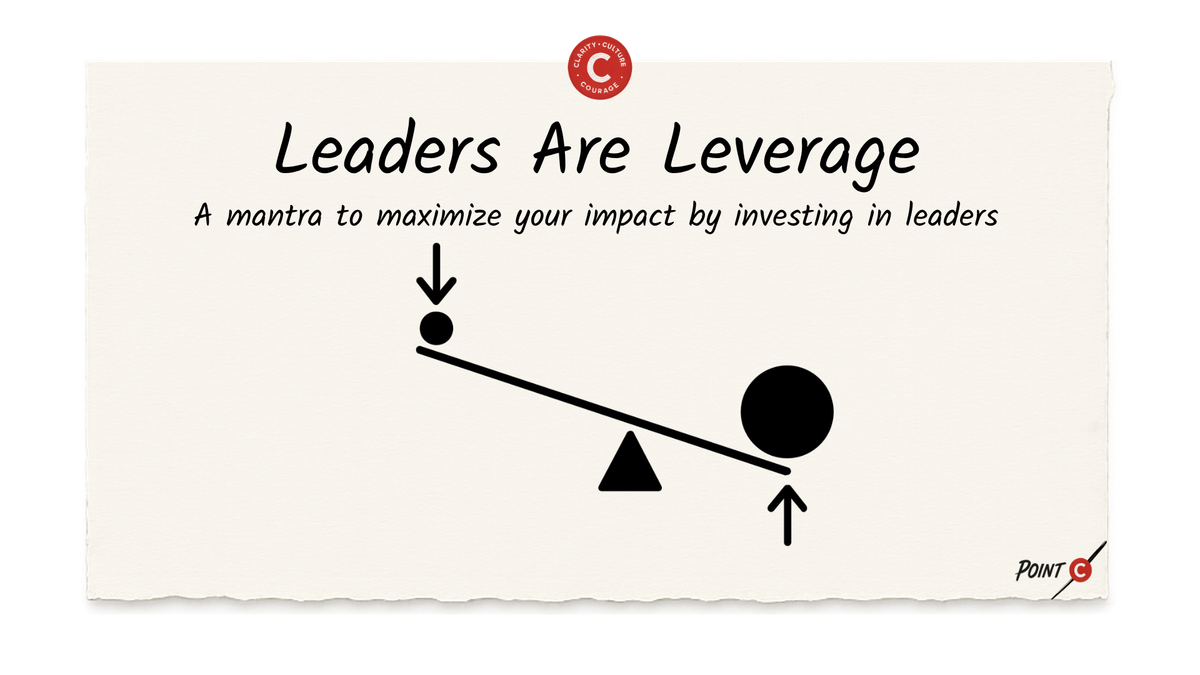
Leaders Are Leverage
A mantra to invest in developing leaders to maximize your impact

Was this forwarded to you? Subscribe here to get one leadership framework per week.
Last week, we went deep on the twentieth mantra in my Mantra Dashboard: Close The Loop. One mantra remains, and I promise we'll get to it next week. But this week, I'm interrupting the series. We're in a moment that only comes once a year, and I want to use it to show you an idea that sits underneath everything I write here.
Applications just opened for the 2027 cohort of the Sulzberger Executive Leadership Program at Columbia Journalism School, the program I've directed and redesigned since 2019. And rather than simply telling you applications are open, I want to take you inside it. Why I design it the way I do, how I design it, and what actually happens to the twenty-eight or so leaders who go through it each year. Because whether or not you ever apply, this program is where an idea I believe deeply comes to life:
Leaders are leverage. Every leader is a multiplier, if they choose to be.
Why I Spend Twenty Weeks A Year On Twenty-Eight Leaders
I used to be a CEO. I founded and ran Matter, a startup accelerator and venture fund for media entrepreneurs. When I wound Matter down and took the helm of the Sulzberger Program, I missed being on the frontlines, building and scaling my own team. Then I realized something that changed how I think about how I focus my time.
I could never have more impact than I do from the perch I sit in now.
Here's the math. When I work with one leader, I'm not working with one person. I'm working with every person on their team, every meeting they'll ever run, every piece of feedback they'll ever give, every subculture they'll ever build. A leader is not a single node in an organization. A leader is a multiplier. Change how one leader leads, and you change what work feels like for everyone around them, and everyone around the people they develop, for years.
That's why the program takes only twenty-eight leaders a year. Since I redesigned it in 2019, 159 fellows across 7 cohorts have gone through it. That sounds small until you do the multiplication: those 159 leaders run teams, newsrooms, and companies across the world, from startups to institutions, from LA, to New York, to Zurich, to Tokyo. Every framework they carry out of the program, every mantra, every ritual, lands on a team.
One fellow put it this way in an anonymous program survey: "The environment created in the program, of vulnerability, openness, frank feedback, is a working example of how it can actually be done in our own orgs. When there's a group of people willing to build a positive culture, it can be done in a short amount of time."
That's the leverage thesis in one quote. The program doesn't just teach culture. It is one. And the fellows carry it home.
I Design It The Way I Teach It
If you've been reading this series, you already know the blueprint. Everything I've written about in the Mantra Dashboard series, the program strives to do. Not as content. As experience. My bar is not a good course evaluation. My bar is that every fellow has a life-changing experience, one that reaches well beyond the program and well beyond their current job.
Before I design any experience, I start with the question I've taught you to ask before any meeting: if I waved a magic wand, where would people be walking in, and where would they be walking out? For the Sulzberger Program, the answer walking in is a group of talented, senior, slightly skeptical strangers who were promoted for being excellent at journalism and never taught how to lead, and who now carry strategic and leadership challenges critical to the future of their organizations, the future of journalism, and, I believe, the future of democracy. The answer walking out, twenty weeks later, is a tight cohort of leaders with a strategic project their organization needs, a personal leadership playbook they believe in, and the lived experience of a subculture with high standards and high safety at the same time. Leaders who can now move the challenges that were sitting on their plate when they arrived.
The design braids together five strands: strategy, leadership, executive coaching, the cohort, and personal development. Fellows accelerate a real strategic project. They build their own leadership playbook. They meet with me one-on-one every month for coaching. They form a peer group most tell me they've never had at their level, because leadership is lonely and it gets lonelier the higher you go. And underneath all of it runs the personal work, because you cannot transform how someone leads without touching who they are.
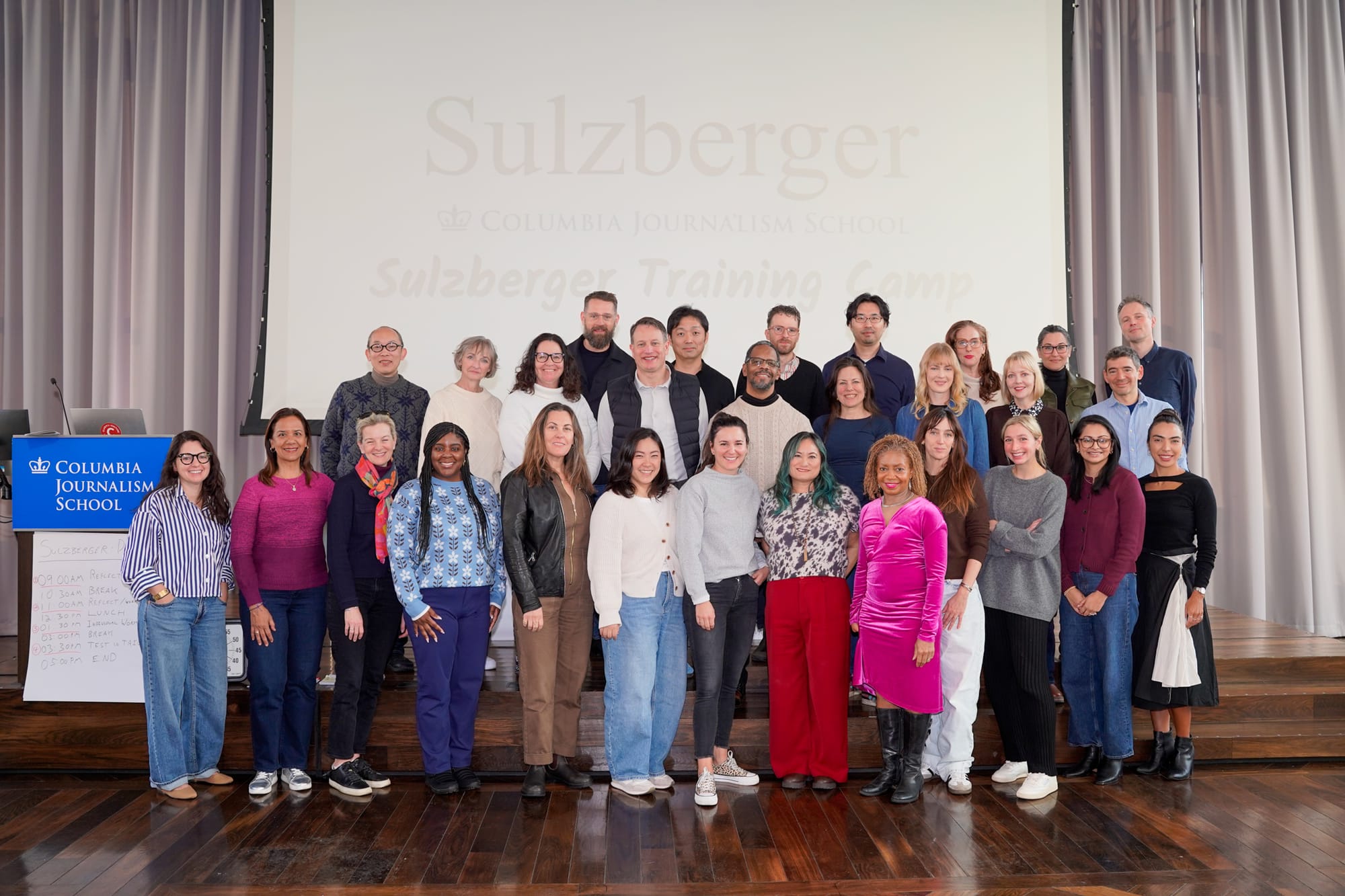
Everything between those two points is designed. The program opens with the Sulzberger Training Camp, five days in which fellows form small teams and build a new venture from scratch. Why? Because you cannot lecture someone into a new mindset. You have to let them experience being prototype-driven, failing forward, embracing constraints, and testing with real users, and then reflect on what just happened to them. One fellow described the first week as a gauntlet: "It creates bonds between the cohort members that reminds me of boot camp. You emerge from it a better leader than when you went in." Another wrote that it "pushed me out of my comfort zone a dozen different ways each day, upended my idea of what's possible to accomplish in a day, an hour, twenty minutes, and gave me the confidence to go build something NEW."
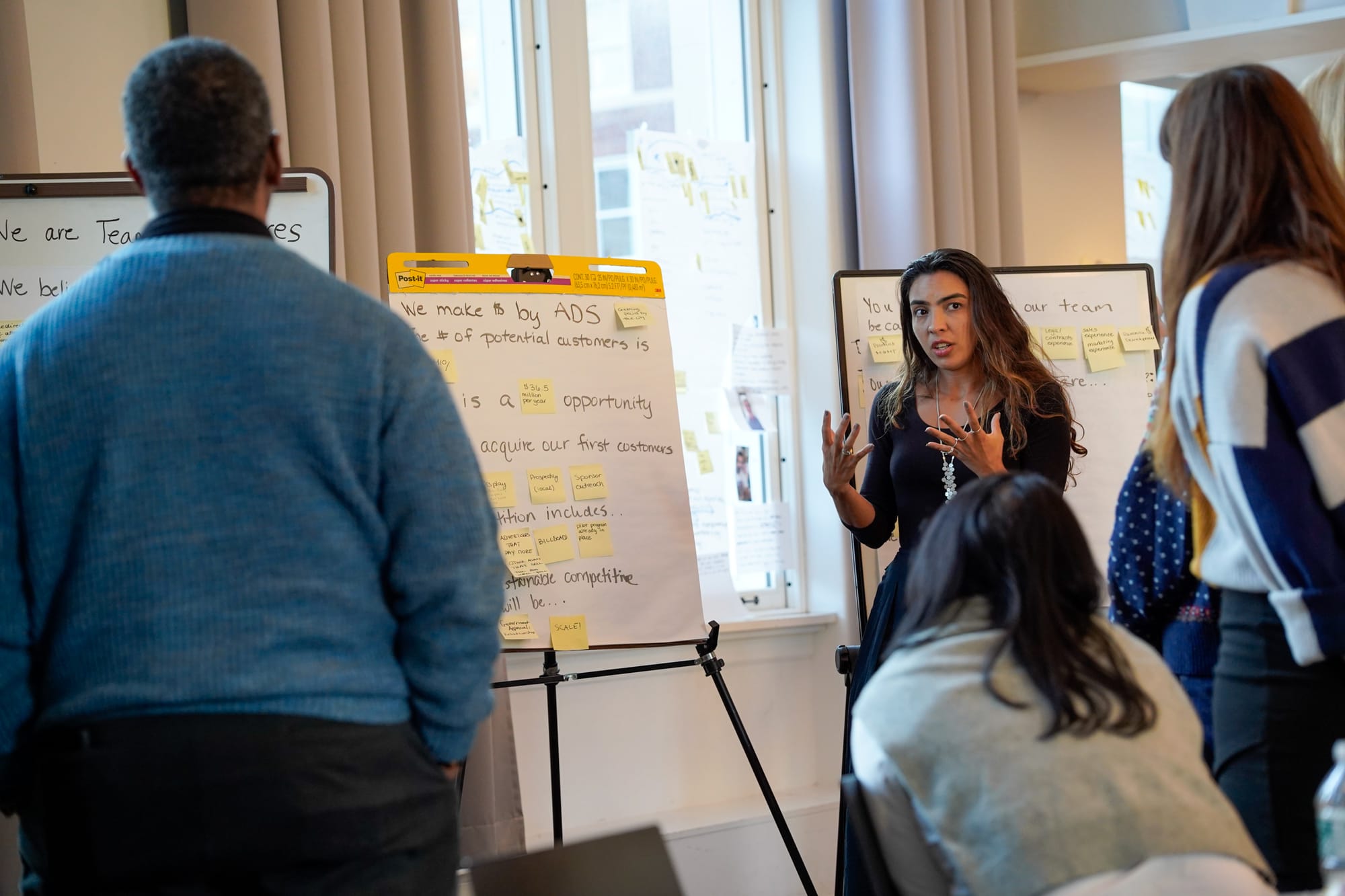
The strategy track gets the same design attention. Fellows bring a strategic project their organization genuinely needs, and across three structured sprints they learn to understand the problem from the top down and the bottom up, to get out of the building until they know exactly who their user is, to prototype and test a minimum desirable experience, and to build a defensible business plan. Along the way, each sprint ends in a design review where fellows put unfinished strategy in front of the cohort and fail fast, while the failures are still cheap and the direction can still change. Then they learn to tell it as a Venture Story: a strategy narrated through one real user's life, not an abstract deck. By the final week, they can pitch their organization's future in a way that wins support and resources. Strategy and leadership are the two levers a CEO has. The program refuses to teach one without the other.
The default mode is designed too. From the first morning, the norm is listen and iterate: everyone's feedback is valuable, feedback is a gift and not a demand, and the most senior voice in the room doesn't get to anchor the thinking. Design reviews run on the exact rituals I've shared in this newsletter. I teach the Mantra Ladder, and every fellow builds their own as part of their personal leadership playbook. Norms get set explicitly, including one that surprises people: phones and laptops go away. After a brief panic, fellows experience something many haven't felt in years. Pure focus and engagement. And the meetings, all of them, are designed, because the program has to model the standard it teaches. The line I hold myself to came from a fellow's reflection at the end of this year's program, describing what made it work: practicing what you preach. That's the design constraint. If the program doesn't live its own frameworks, nothing else lands.
What It Does To People
I've spent this series describing what a designed subculture feels like. The program is where I get to watch people feel it for the first time, and then watch what they do with it.
For years, I've asked every fellow the same anonymous question after each residency: would you recommend this program to a peer? I have yet to hear a no. But the numbers matter less than what happens when fellows go home.
In the weeks since this year's program ended, the updates from fellows have read like a running log of the frameworks hitting the real world. One fellow walked into a negotiation she'd been dreading, used the tools, and wrote to the group: "It completely disarmed the tension. It feels amazing to navigate a conversation I was dreading and come out with what I needed while actually strengthening the relationship." Another used role clarity and direct communication to turn around a project so troubled its leader had decided to quit; two weeks later the leader had stayed and the project had gone from a month behind to a month ahead. Another got her founders to agree to fail forward on a new strategy and launch it in under two weeks, instead of perfecting it into irrelevance. Another persuaded her organization's chief of staff that every manager should build mantras with their team. One printed the mantras and pinned them above her desk. One said "embrace constraints" so many times in a one-on-one that she apologized to her direct report for repeating herself.
She shouldn't apologize. That repetition is the leverage. Leaders are the signal generators of culture, and she had found her frequency.
And the transformations run deeper than tools. "There is clearly a before and after Sulzberger," one fellow wrote this spring. "It challenged me, broadened my perspective, and will have a lasting impact on the way I lead." Another: "I entered as someone who was pretty good at improving existing things but rather clueless at building new things. Now I've got a blueprint I believe in for creating new things, and that feels like a superpower." And one alum put it in a way I'll never forget: "Corey changed how I think about problem solving more than any boss, therapist or mentor I've had."
The most consistent piece of feedback I get, though, is one sentence: "I wish my boss had done this." I hear it every single year. And it tells you something important about the state of leadership, in this industry and beyond. Almost nobody in journalism teaches leaders how to lead. We promote people for being excellent at the craft and then leave them to figure out the leadership part alone, in public, with a team watching. So they assemble a picture of what good looks like from the bosses they've had and the tropes we've all absorbed: leaders are infallible, leaders have the answers, leaders never let them see you sweat. Fellows arrive genuinely believing that's the standard.
Then the program starts unwinding it, and what replaces it is a new sense of excellence that is deeply counterintuitive. Leaders are vulnerable. Leaders say "I don't know." High standards and high safety are not a tradeoff; the combination is the target. Watching a room full of accomplished executives discover that everything they were performing was optional, and that the opposite works better, is why I keep doing this work. That cycle of untaught leaders teaching the next generation their own bad defaults is exactly what the program exists to break.
The Multiplication
The part that matters most happens after the program ends.
Months and years after the program ends, the fellows are still running the rituals, and more importantly, they're teaching them. Fellows are running design reviews in their newsrooms, building mantra dashboards with their executive teams, and rolling out the frameworks to their own direct reports. One organization is now building mantras with every manager, led by the managers themselves. Another fellow's board just adopted explicit, visual norms as their first act after an offsite. Another rolled out her coaching tools to every editor and senior producer on her team.
That's the subculture expansion zone working at industry scale. Culture doesn't spread through memos or conference talks. It spreads through people who carry the language. Every fellow leaves building a lever of their own. And every team they touch becomes a place where a few more future leaders experience what a designed subculture feels like, and want to build it wherever they go next.
Leaders are leverage, if they choose to be. Every fellow who walks out of that final week has made the choice: to be a multiplier rather than a single pair of hands. This program is simply how I act on that idea. Your version will look different, and it starts the same way: with one leader deciding that developing the people around them is the work, not a distraction from it.
If This Is You
The 2027 cohort is now open for applications. It's for senior leaders in journalism and media: CEOs, publishers, C-suite executives, founders, and rising leaders on the path to those roles. You bring a strategic project your organization genuinely needs, and the ambition to lead culture change around it. The program runs January through May 2027: two residency weeks at Columbia Journalism School in New York to start, seventeen weeks of virtual cohort sessions with monthly one-on-one coaching with me, and a final residency week back in New York to finish.
Everything you need is here: the full program page, including structure, dates, tuition, and the application. The first info session is Tuesday, August 11 at noon ET (register here). Applications are reviewed on a rolling basis, so apply early: no later than October 11.
And if you're reading this from outside journalism, you may have noticed something as you read: nothing in this post is actually about journalism. Defining excellence, designing default modes, building subcultures with high standards and high safety, developing leaders who multiply: this is universal. I've taught these same frameworks to Fortune 500 C-suites in completely different industries, and the teaching and the transformation hold. Journalism is the arena where I run this particular program, because I'm a former journalist who has dedicated his career to strengthening journalism by infusing it with the best practices of innovation. The same design principles are how I build custom training camps and leadership programs inside organizations of any kind. And if the highest-leverage investment right now is in you, I work with a small number of leaders directly through one-on-one executive coaching. The arena changes. The leverage math doesn't.
Your Challenge This Week
Whether or not the Sulzberger Program is for you, ask yourself the question underneath it: who is investing in you as a leader? Not in your output. In you. If the answer is nobody, that's worth sitting with, because the version of you that gets deliberate investment leads differently for decades.
And if someone came to mind while you read this, a colleague, a rising leader, someone who deserves this, forward this to them. The most powerful applications often start with exactly that nudge.
Next Week
Back to the series. We return to the Mantra Dashboard for its twenty-first and final mantra, the one where all the others come together in one room: Design The Meeting.
Know someone who would find this useful? Forward this email to them. They can subscribe here to get their own weekly half sheet.
About This Newsletter
The Idea Bucket is a weekly newsletter and archive featuring one visual framework, supporting one act of leadership, that brings you one step closer to building a culture of innovation.
It’s written by Corey Ford — executive coach, strategic advisor, and founder of Point C, where he helps founders, CEOs, and executives clarify their visions, lead cultures of innovation, and navigate their next leadership chapters.
Want 1:1 executive coaching on this framework or others? Book your first coaching session. It's on me.