The Sulzberger Program

Build strategy. Shape culture. Lead journalism into a more sustainable future.
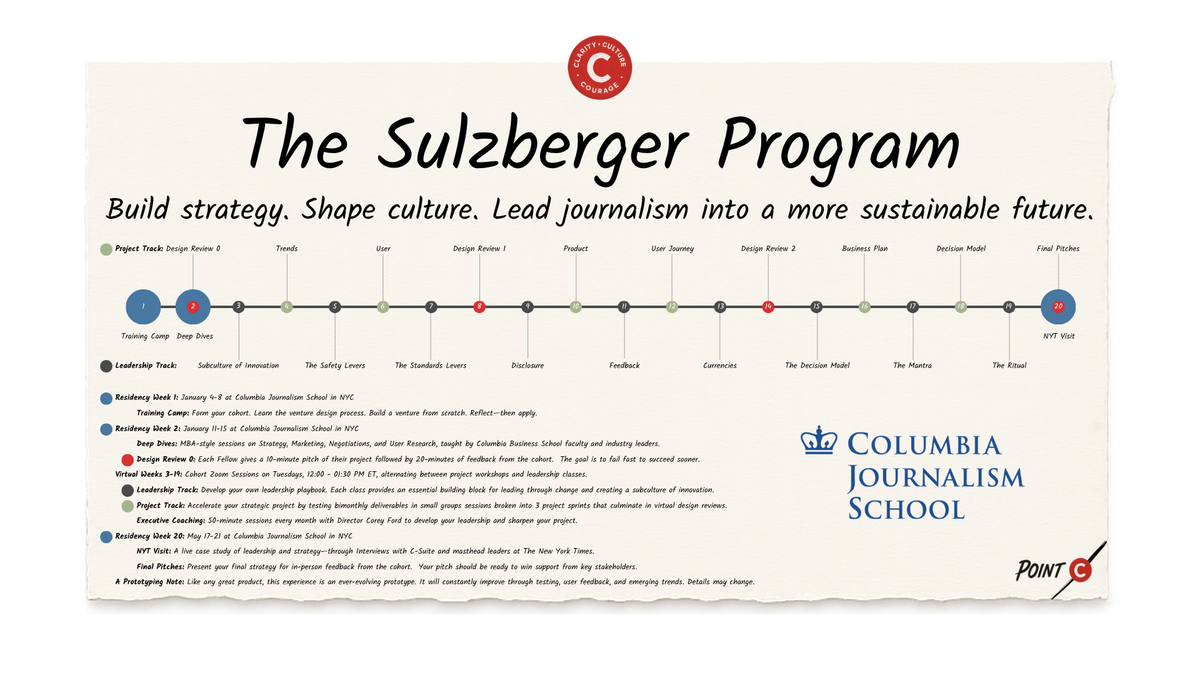
The Sulzberger Executive Leadership Program at Columbia Journalism School is a 20-week accelerator for senior leaders in journalism and media. Fellows bring their organization's most pressing strategic challenge into the program and leave with a refined strategy, a personal leadership playbook, and a cohort of peers that lasts well beyond the course.
The program has two tracks. The project track accelerates a strategic initiative that's critical to your organization's future. The leadership track helps you build the culture and the leadership framework to make it stick.
You work on your real problems with real stakes. You walk out with something you can implement.
If you want to understand how I think about this program before you dig into the details, start here: Leaders Are Leverage.
Program Structure
A 20-Week Accelerator for Strategy & Leadership
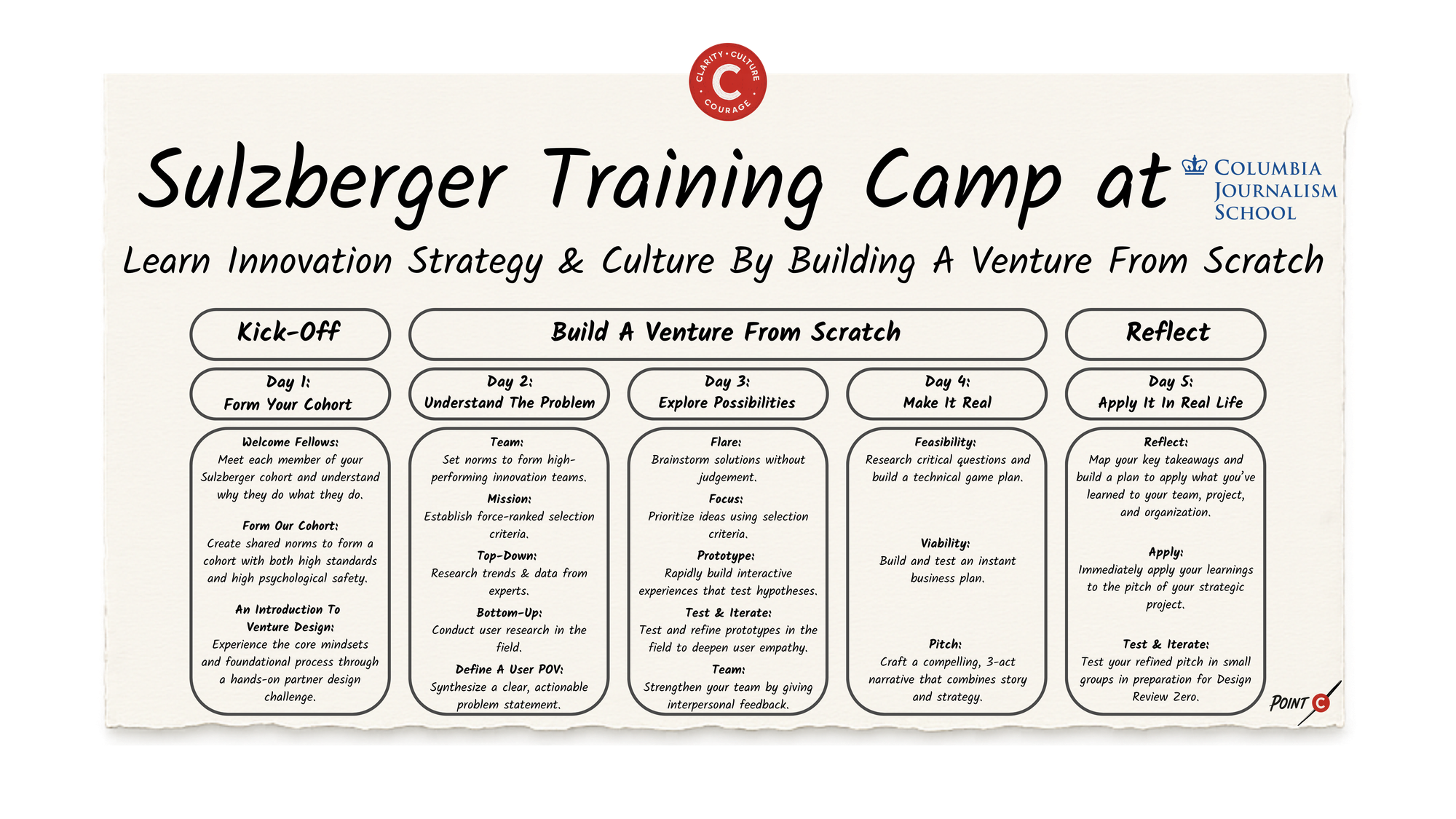
Residency Week 1: The Sulzberger Training Camp
January 4–8, 2027 • Columbia Journalism School, NYC
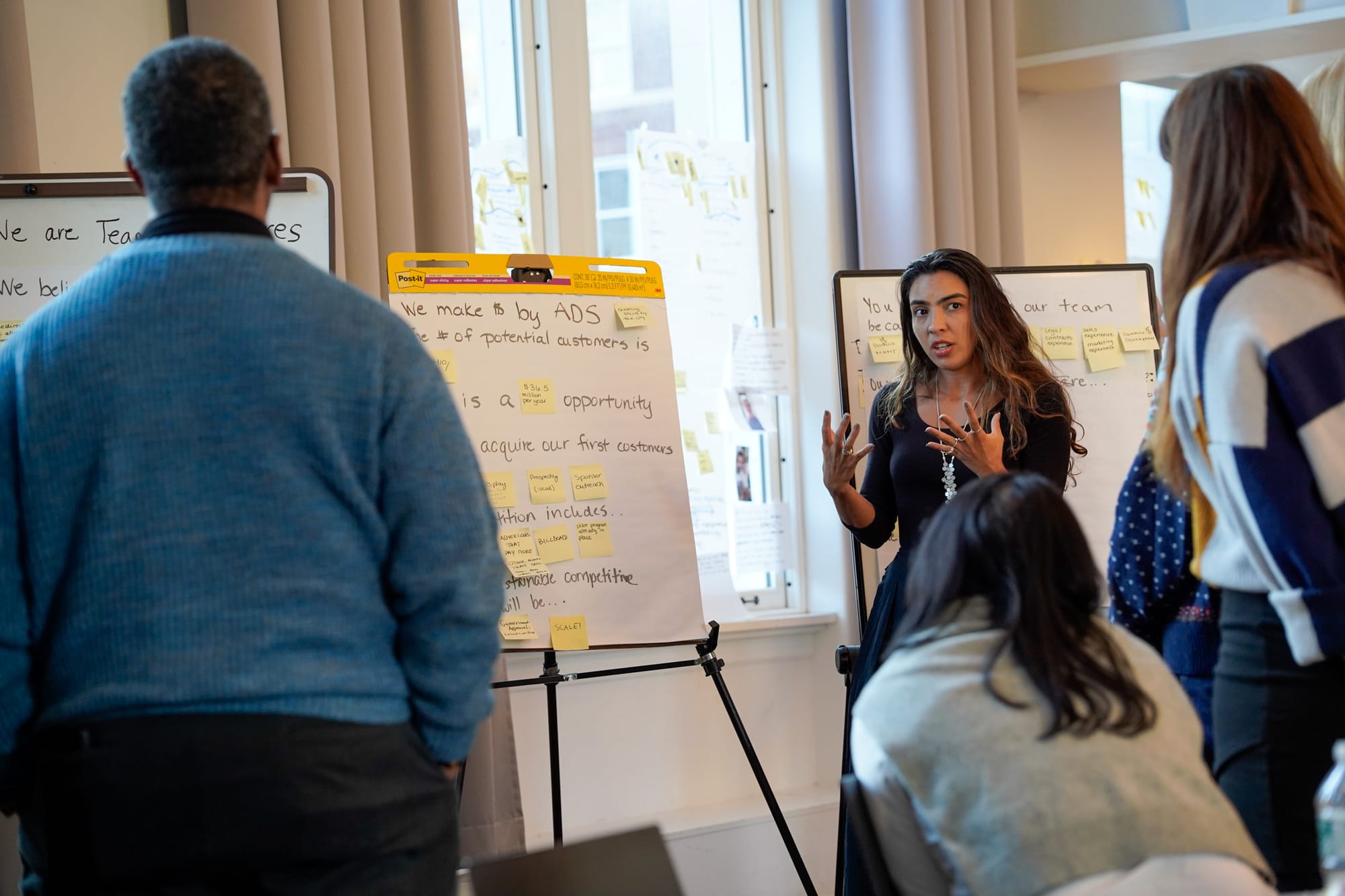
The program begins with a five-day immersive project-based Training Camp at our New York City campus. Fellows form small teams and build a new venture from scratch, learning both the process of building a business and the elements that need to come together to make a strategic project successful. By the end of the week, a group of strangers has become a cohort built on trust and authenticity that extends well beyond the course.
Residency Week 2: Deep Dives & Design Review 0
January 11–15, 2027 • Columbia Journalism School, NYC
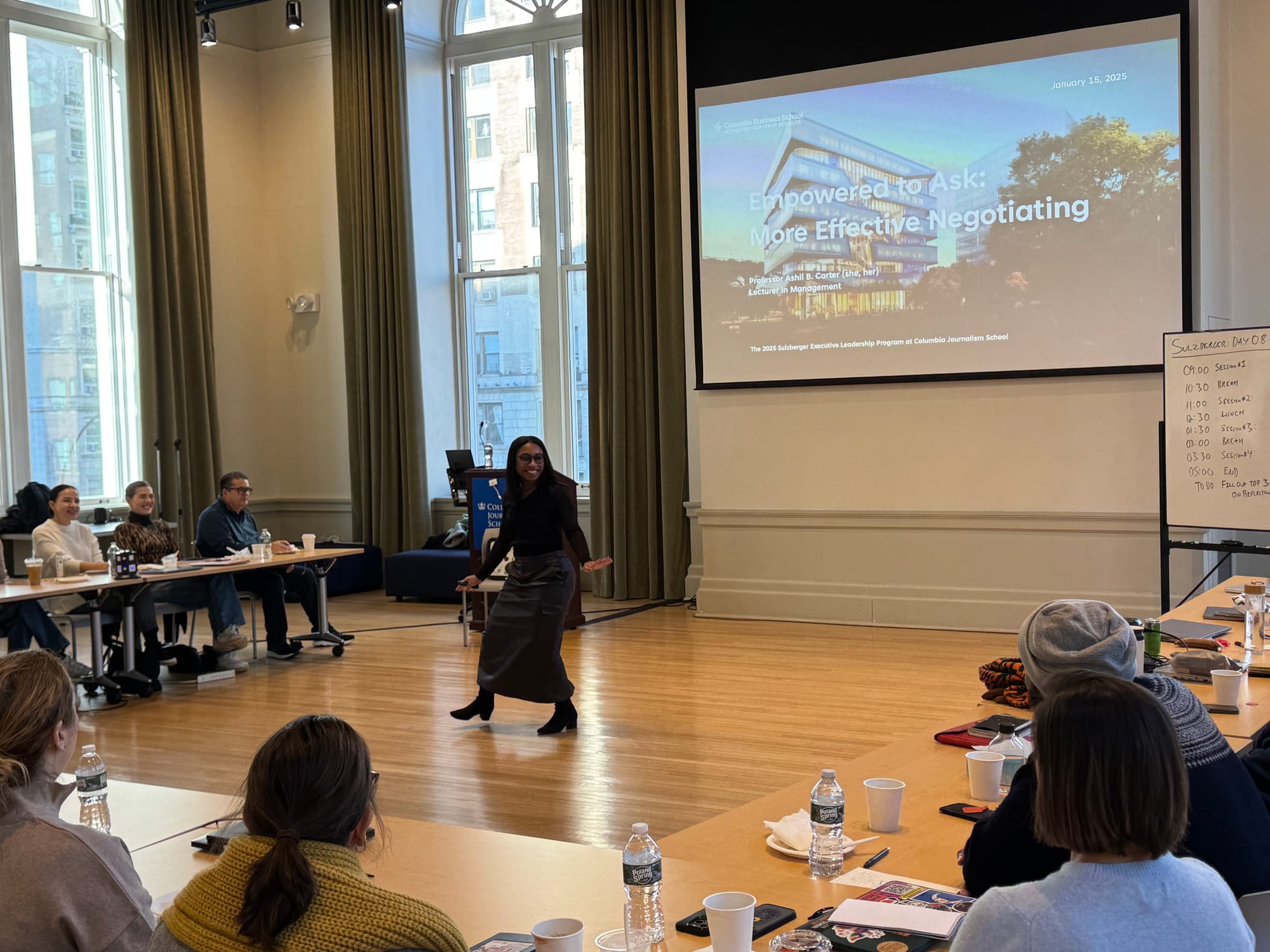
In the second week, the program moves from the training camp model into deeper dives into business concepts introduced in the first week, such as Strategy, Marketing, Negotiations, and User Research. These are led by faculty of Columbia Business School as well as top industry experts. Week Two ends with Design Review Zero, where fellows fail fast and get feedback on their strategic projects from the rest of the cohort.
Weeks 3–19: Virtual Cohort Journey
Tuesdays, Noon–1:30 PM ET • Weekly Zoom Sessions
After the two week intensive, fellows return to their organizations to 1) accelerate their strategic projects and 2) develop their leadership playbooks.
The project track convenes fellows in small groups every other week to get feedback on deliverables. It is divided into three structured 6-week sprints, culminating in a design review:
- Sprint 1: Understand The Problem: Top-Down + Bottom-Up Research
- Sprint 2: Explore Possibilities: Create A Minimum Desirable Experience
- Sprint 3: Make It Real: Build A Defensible Business Plan
The leadership track convenes the cohort every other week to learn an essential building block for leading through change and creating a subculture of innovation. Fellows develop their own leadership playbook by the end of the course.
One-on-One Executive Coaching
Monthly • 50-minute Zoom Sessions
Every month during the virtual phase, fellows meet one-on-one with Program Director Corey Ford. These sessions are a focused space to sharpen strategy, work through leadership decisions, and navigate the organizational dynamics that come with driving change from the inside.
Many alumni say this is one of the most transformative parts of the program, and often continue coaching with Corey long after it ends.
Residency Week 20: Final Pitch & NYT Visit
May 17–21, 2027 • Columbia Journalism School, NYC
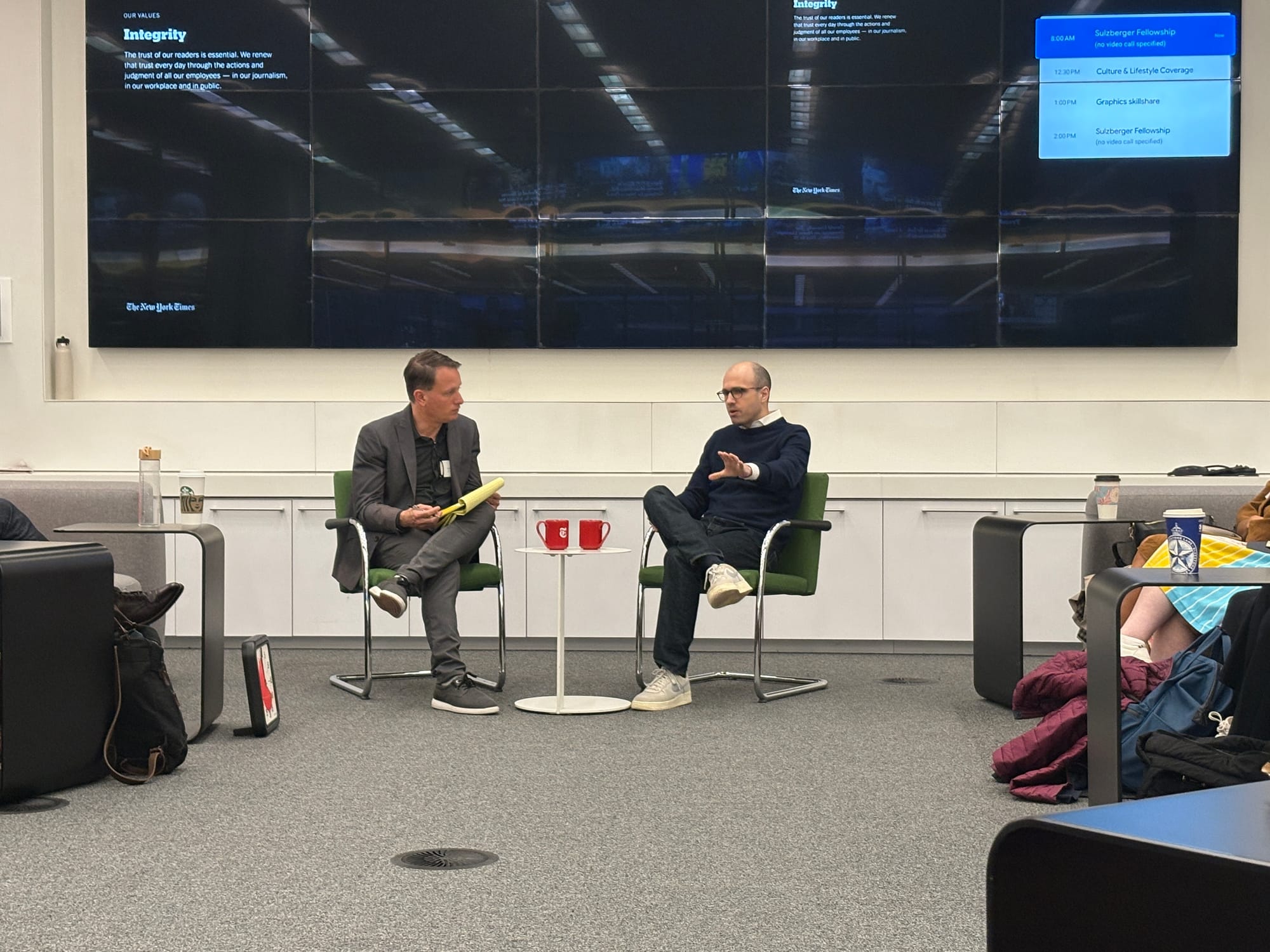
The final week is back in New York City for final project presentations that equip fellows to win support and secure resources from key stakeholders at their organizations. Fellows also visit with senior leaders at The New York Times to see how the concepts they have learned throughout the course are applied in C-level roles.

Program Outcomes:
By the end of the program, fellows leave with:
- A refined, actionable strategic solution
- A personal leadership playbook
- A clear plan to gain internal support and drive implementation
- A tight-knit cohort and alumni network that lasts well beyond the program
What Sets the Program Apart
Concentrated Timeline
A year's worth of executive development in 20 weeks. Fellows deliver strategic results on real challenges while still leading inside their organizations. This is not a retreat you come back from and forget. The work is continuous, the feedback is ongoing, and the results show up in your organization while you're still in the program.
Innovation-Focused
Traditional management training doesn't prepare leaders for what journalism and media demand right now. The business models are shifting. The audience expectations are changing. The technology is evolving faster than most organizations can adapt. Leaders in this industry need to do more than manage. They need to build cultures and processes that help their organizations anticipate change, experiment with emerging technologies, and find sustainable paths forward. The Sulzberger Program is designed specifically for leaders operating under those conditions.
A CEO Lens on Culture & Strategy
Fellows learn to see their organization from the perspective of the CEO. Culture and strategy are the two levers a CEO has to move an organization in the right direction. Fellows leave the program with the ability to shape strategy and to intentionally design the subculture around them to both implement and improve upon that strategy.
Leaders Learn By Doing
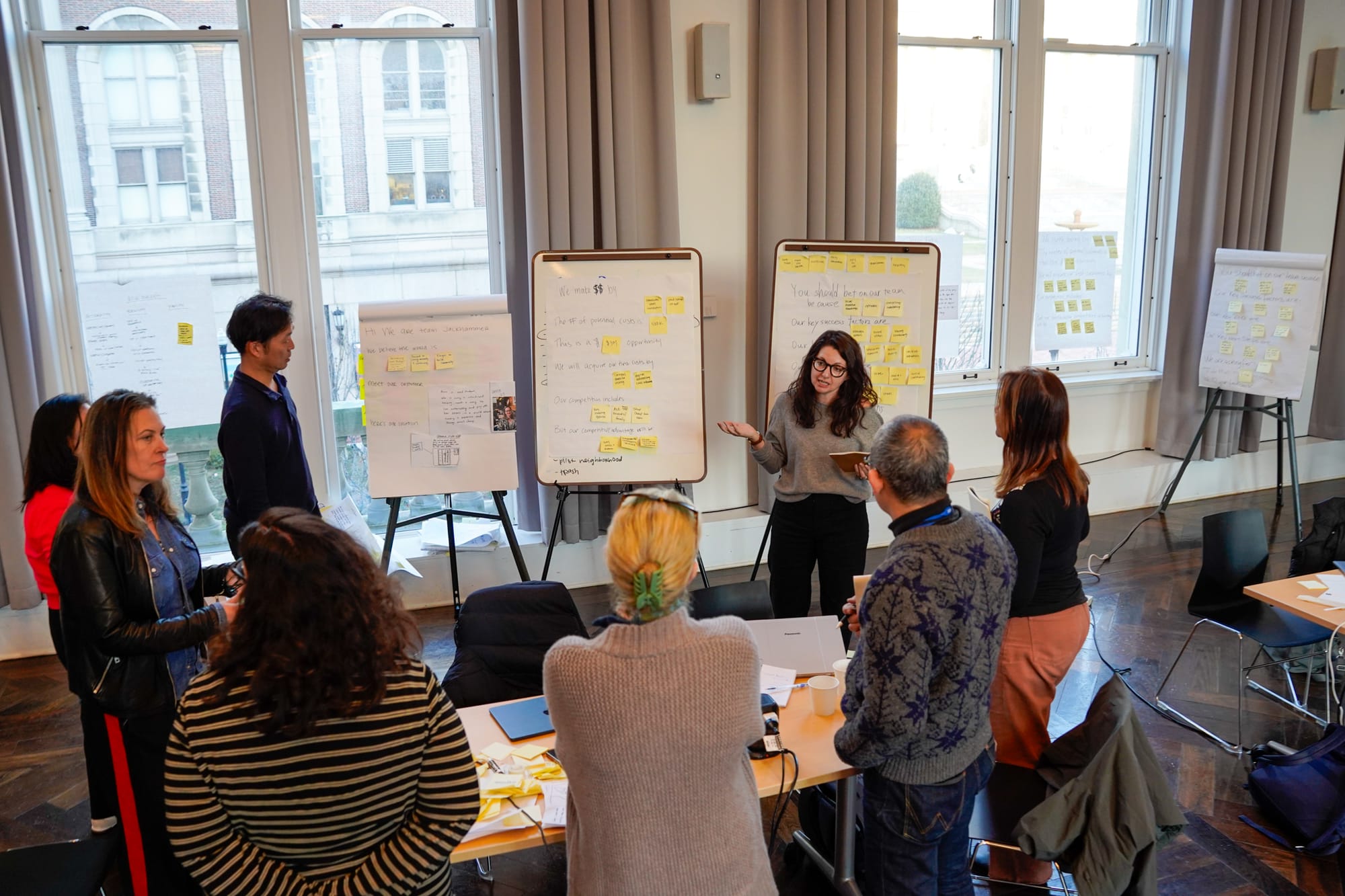
I redesigned the Sulzberger Program in 2019 around a simple principle: leaders don't learn from lectures. They learn by building things. The Training Camp puts fellows into cross-functional teams to build a venture from scratch in five days. That shared experience does something that no case study or panel discussion can do. It changes how people think about problems, about risk, and about each other. And because fellows are working on their own strategic projects throughout the program, everything they learn gets applied immediately. The classroom and the newsroom are the same thing.
A Tight Cohort & A Powerful Network
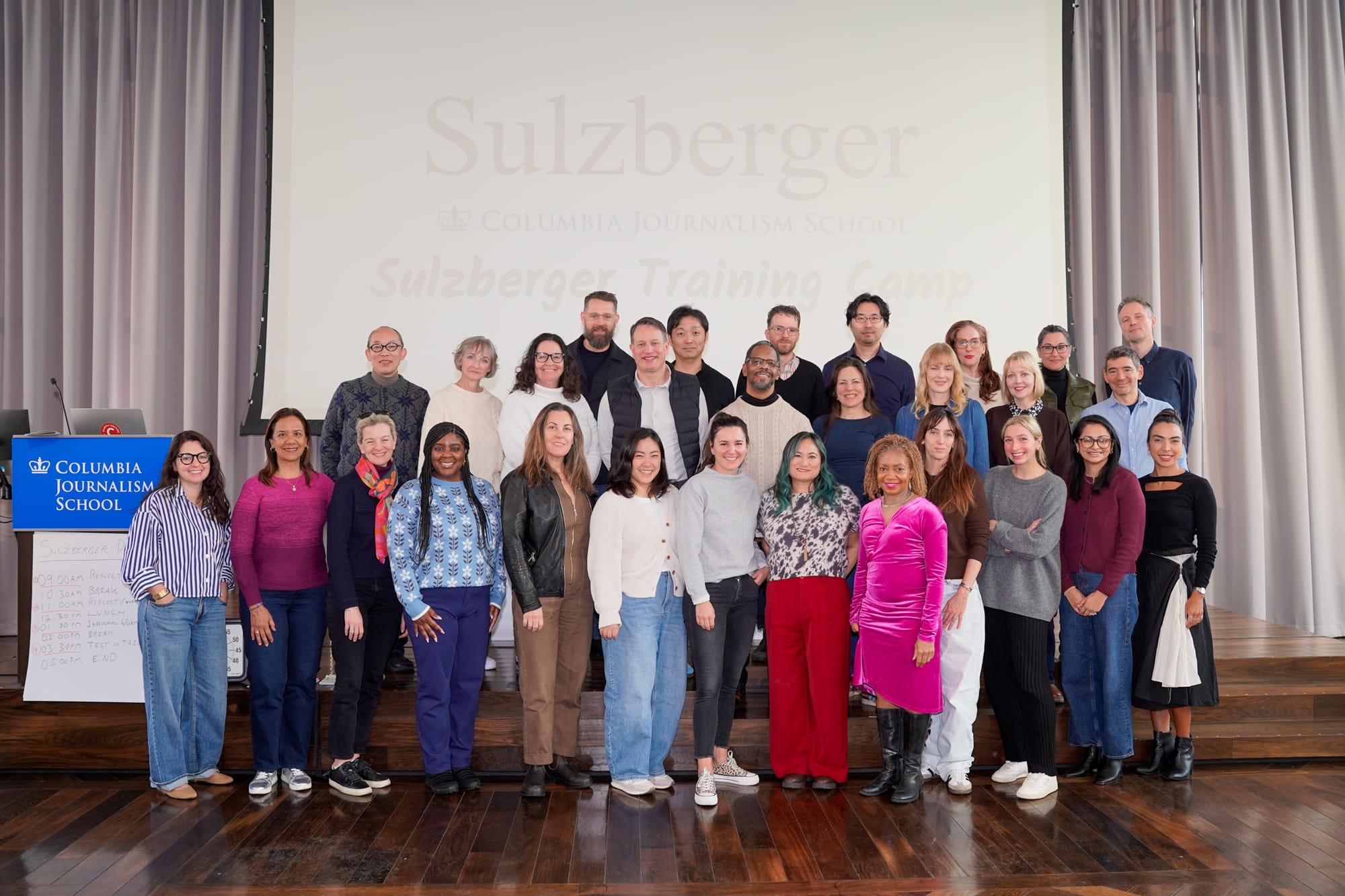
The Sulzberger Program draws instructors from Columbia's Journalism and Business Schools, brings in industry innovators working in one of the world's great media capitals, and connects fellows to the Columbia Journalism School and Sulzberger alumni networks. But the real network is the cohort itself. Twenty weeks of building, presenting, giving feedback, and coaching each other creates relationships that last. Alumni regularly reach out to each other for advice, referrals, and support years after their cohort ends.
Proven, Repeatable Impact
Since the program was redesigned in 2019, 159 fellows across 7 cohorts have gone through this experience. Read what they have to say about it.
Who Should Apply
The Sulzberger Program is designed for:
- CEOs, Publishers, and C-Suite executives at established news organizations
- Founders and executives at media startups
- Rising leaders on a path to become the next C-Suite executives in journalism
There is no level that is too experienced for the program. The most common piece of feedback I get is "I wish my boss had done this."
The cohort is intentionally formed to mix media companies from different stages, legal structures, revenue models, focuses, and locations:
- Company Stages: From start-ups to institutions
- Legal Structures: From for-profits, to non-profits, to public media
- Revenue Models: From subscription, to advertising, to membership
- Focuses: From global, to national, to state, to local, to niche
- Location: From NYC, to the USA, to Europe, to Japan, to anywhere else
Applicants should bring a strategic project and the ambition to lead culture change around it. The strategic project has two core requirements:
- It Must Be Applied & Strategic: Projects should address one of your organization’s most pressing strategic challenges and apply a concrete solution by the end of the course. No white papers. No content creation.
- It Must Fit Into The Fellow's Day-to-Day Work: Fellows must choose projects that fit into their day to day work and responsibilities. The project should naturally be at the top of their priority list during the course. No side projects.
Investment
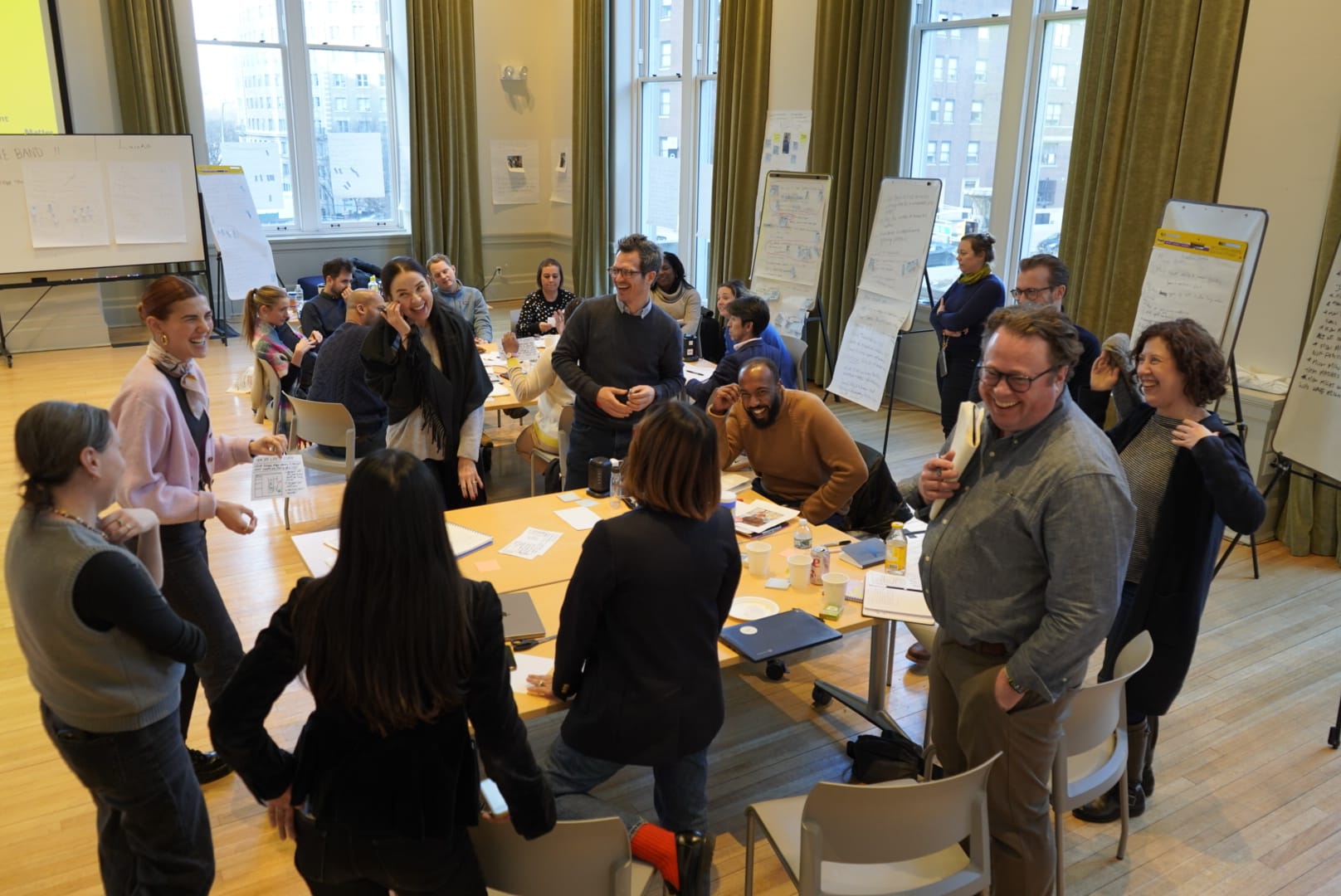
Program tuition is $25,000 and includes all coursework, group meals during residencies, and monthly executive coaching sessions. Additional coaching sessions during or after the course are available for an additional fee. Travel and lodging are the responsibility of the fellow and/or sponsoring organization.
The vast majority of fellows are fully sponsored by their organizations. Because the program is directly applicable to advancing mission-critical strategy, most tuition is covered by strategic or project budgets, not just training budgets.
For nonprofit organizations, many fund participation through sponsorship from a major donor who supports executive development. A few fellows each year choose to self-fund for their own professional growth.
Columbia Journalism School may offer up to four no-fee placements to leaders who would not otherwise be able to attend. Applicants can request consideration directly in the application form. Due to the highly competitive nature of the no-fee placements, applicants are highly encouraged to seek sponsorship in parallel to applying for a no-fee placement.
Application Process
Applications are now open. The application is a simple form that takes less than an hour to complete. No references or approvals required. It includes three parts:
- Basic information
- Application questions, including
- Describe your current role and responsibilities in your organization.
- Link to a project and tell us why you are proud of it.
- What motivates you to apply to the Sulzberger Program?
- Describe the strategic problem you want to solve with your Sulzberger project.
- Describe what success looks like to you and your key stakeholders, and force-rank your criteria.. (See this post for tips: https://pointc.co/the-selection-stack/)
- Describe a back-up project if the first project didn't work out.
- What is your current assessment of your team's culture of innovation? Where would you like to move it through your leadership?
- Investment
- How do you plan on paying for the program?
- Have you talked with your organization about sponsorship?
- Do you need to apply for a no-fee placement?
For international applicants, please see this privacy notice: https://www.cuit.columbia.edu/privacy-notice.
Applications will be reviewed promptly. Promising applicants will be selected for a 30-minute first round interview over Zoom with Director Corey Ford. Follow-up interviews may be scheduled as needed. Decisions for sponsored candidates will be made on a rolling basis until the cohort is full. No no-fee placements decisions will be made until after the application deadline.
Key Application Dates:
- Applications Open: Thursday, July 23, 2026
- Attend An Info Session:
- Info Session #1: Tuesday, August 11, 2026 Noon ET (Watch the video here.)
- Info Session #2: Tuesday, Sept 08, 2026 Noon ET (Watch the video here.)
- Info Session #3: Tuesday, October 06, 2026 Noon ET (Watch the video here.)
- Apply ASAP: No later than Sunday Oct. 11, 2026, Midnight PT
- Rolling Decisions: Ongoing until sponsored slots are full
- Final No-Fee Placement Decisions: By Friday, October 30, 2026
- Non-Refundable & Non-Transferable Deposit of $5,000 Due: Within 5 business days of offer and no later than November 05, 2026
- Cohort Announcement: Thursday, November 12, 2026
- Remainder of Tuition Due: Tuesday, December 01, 2026
Next Steps
If this sounds like the right fit, here's what to do:
1) Sign up for the Sulzberger mailing list.
2) Sign up for and attend an information session (or watch the info session video if the date has already passed):
- Info Session #1: Tuesday, August 11, 2026 Noon ET (Watch the video here.)
- Info Session #2: Tuesday, Sept 08, 2026 Noon ET (Watch the video here.)
- Info Session #3: Tuesday, October 06, 2026 Noon ET (Watch the video here.)
3) Talk to your company about a potential sponsorship.
4) Apply ASAP and no later than October 11, 2026.