Honor The Maker's Schedule
A mantra to ensure your team can do deep work

Before we dive into this week's framework, I am excited to reveal the 2026 Cohort for the Sulzberger Executive Leadership Program at Columbia Journalism School:
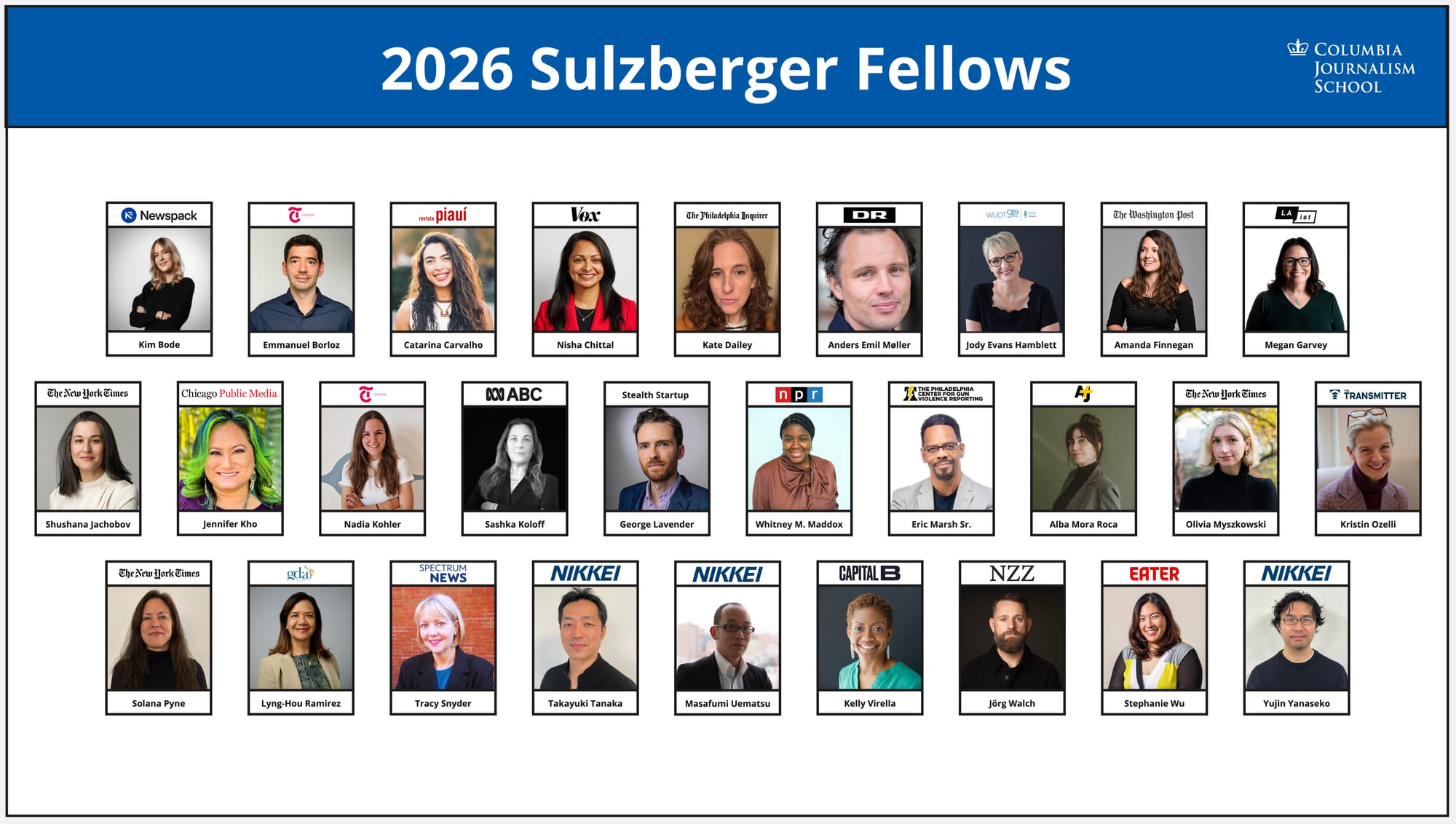
These 28 leaders from journalism institutions across five continents will come together on January 5th to form a tight-knit cohort to accelerate some of the most important strategic challenges in the journalism industry through the 20 weeks of the program. I can’t wait to see how the intentional serendipity of bringing together these innovators will impact these leaders, their organizations, and the journalism industry as a whole. Read more about each fellow and their strategic projects here.
Now, on to this week's framework...
Lately in The Idea Bucket, we've been exploring different leadership mantras that help you be intentional about building a subculture of innovation. I've laid out the following seven essential categories that your leadership mantras need to cover and so far we've discussed one mantra in four of the categories:
- How We Solve Problems
- How We Execute Our Work (Fail Forward)
- Who Makes Decisions (One Consultative Decision Maker Per Lane)
- How We Make Decisions (Always Separate Flaring & Focusing)
- How We Constantly Improve (Feedback is a Gift - Not a Demand)
- How We Communicate
- How We Value Our Time
Today, we'll dive into my favorite mantra for How We Value Our Time: Honor The Maker's Schedule
The Maker's Schedule vs The Manager's Schedule
In July 2009, Paul Graham, the legendary co-founder of Y-Combinator, wrote a short blog post that would influence how I, and thousands of other founders, would think about how we divide up our work days: Maker's Schedule, Manager's Schedule.
In it, he describes two types of schedules:
The Manager's Schedule: Dividing the day into 20-60 minute chunks of meetings where you are constantly context-switching.
The Maker's Schedule: Protecting your time in half-day or full-day chunks in order to be heads down on deep, strategic creative work.
Both are valid and necessary ways of working. Everyone needs (some) meetings for alignment, feedback, brainstorming, hiring, speculative networking, etc. And everyone also needs the space to focus on deep work, whether they consider themselves a "maker" or not.
The problem is that the people with the most power (leaders like you!), tend to work more on a manager's schedule and, if they're not intentional about establishing team norms regarding how time is valued, they can suck away the ability for anyone else to do deep work. As Graham writes:
Each type of schedule works fine by itself. Problems arise when they meet. Since most powerful people operate on the manager's schedule, they're in a position to make everyone resonate at their frequency if they want to. But the smarter ones restrain themselves, if they know that some of the people working for them need long chunks of time to work in.
As an innovation leader, it is your job to ensure that your organization has explicit norms that enable your people to do deep work.
The Importance of Deep Work
I'll just go ahead and say it: Multi-tasking is bullshit.
There's a lot of productivity theater out there. But nothing beats focus.
You want to know why your teammate hasn't gotten that deliverable done when you wanted it yesterday? It's because they aren't focused. They're in too many meetings, and they don't have mutually agreed-upon, force-ranked priorities.
And that's your fault. You haven’t been willing to make real trade-offs. (Everything is a priority! If everything is a priority, nothing is a priority.) And you've made the mistake of thinking that your people can figure out how to effectively manage their own time without any explicit coordination norms from you. (They're all adults. They can figure it out themselves. No, they can't. You have a big role to play here.)
Everybody needs half-day chunks of time to do creative and strategic work. They need heads-down time. And they aren't getting enough of it.
You'll especially see this struggle in open office floor plans. They are well-intentioned. (I know, I built three of them!) They feel inspiring and energetic and make it easy for you to reach out to a colleague to collaborate in the moment. But these constant interruptions kill creative and strategic work.
If you want to see someone struggling to get creative work done, look around your open office and spot the people wearing big, over-the-ear headphones. They aren't wearing them instead of AirPods because they value the difference in sound quality. They're wearing them so you can take the hint to go the f away so they can get their work done. (In fact, in my open offices we developed an explicit norm for this: Headphones = Heads Down)
In order to emphasize the importance of deep work, your team needs to hear the mantra: Honor The Maker's Schedule.
How To Honor The Maker's Schedule
When you adopt the mantra Honor The Maker's Schedule, first and foremost you are signaling that deep work is valued in this organization.
Secondly, you are signaling that you have high expectations for your managers that they be thoughtful and intentional about how they affect the rhythms on their teams. Too often managers center themselves when it comes to decisions about how others spend their time. They force the manager's schedule on others. In a culture driven by the mantra Honor The Maker's Schedule, mangers are evaluated on how effectively they are able to protect the deep work of their team.
Once your managers know that this is a value (and you hold them to high standards when it comes to it), they will be able to figure out bottom-up solutions to implement this. But, since there is inevitably a lot of overlap between departments, I would strongly suggest that you and your executive team come up with an operating theory on the best rhythms of the organization. It will be different for each company's particular context, but some examples include:
- Having set no-meeting days. (Tuesdays and Thursdays are meeting days and the rest are heads down days.)
- Have designated heads down half days. (No meetings before 1PM.)
- Having set days of the week for 1:1s and set days of the week for team meetings. (Tuesdays are 1:1 days. Thursdays are team meeting days.)
- Using constraints to force the prioritization and cancelation of recurring meetings. (No employee should have more than 1/3 of their calendar taken up by meetings. Once you've hit that limit, you need to cancel a meeting to accept an additional one.)
While each context will be different, your job as a leader is to 1) repeatedly signal that deep work in valued and 2) provide high-level top-down direction to enable more effective coordination decisions throughout the organization.
A Note on Executive Assistants
Having an executive assistant is an honor to be wielded with deep humility.
If you have an executive assistant, congratulations! Your life has (hopefully) gotten a bit easier in terms of how you spend your time and the coordination costs associated with aligning your time with others. As the leader, your time is tremendously valuable and you should be protecting it for the good of your company.
However, there is a real danger here I want you to be aware of. If you don't get your executive assistant fully on board with Honor The Maker's Schedule, they might become the primary cause of deep work disruption.
By default, executive assistants are trained see your time as being more valuable than the time of others. They may just drop a new meeting into everyone's calendars without permission (and without knowing the context of the harm it may cause.)
So, if you operate with executive assistants, the first priority is to get them on board with the strategy and tactics to Honor The Maker's Schedule. Be clear about this and hold them to high standards.
Your Challenge This Week
Audit The Maker's Schedule of your organization.
1) Forward this email to your team to set the context.
2) Have each of your leaders examine their own calendars over the last two weeks. How many half day chunks did they have in their schedule to do deep work? How many of those were interrupted? What was the balance of deep work time with meetings? What are their hypotheses for why they spent their time this way?
3) Have your leaders ask key people on their teams the same question. Collect stories and distill patterns.
4) Come together as an executive team to share stories and distill insights.
5) Decide if there are some basic company-wide coordination rules that may help everyone come up with tactics to Honor The Maker's Schedule.
6) Try those tactics for a test period of 2-4 weeks.
7) Examine the results and iterate.
Next Week
We've now got five mantras across five essential categories in our back pocket:
- How We Value Our Time (Honor The Maker's Schedule)
- How We Execute Our Work (Fail Forward)
- Who Makes Decisions (One Consultative Decision Maker Per Lane)
- How We Make Decisions (Always Separate Flaring & Focusing)
- How We Constantly Improve (Feedback is a Gift - Not a Demand)
Next week, we'll dive into a mantra that might save your team from burnout and protect mental health. It's my go-to mantra for How We Communicate: Text If Urgent
About This Newsletter
The Idea Bucket is a weekly newsletter and archive featuring one visual framework, supporting one act of leadership, that brings you one step closer to building a culture of innovation.
It’s written by Corey Ford — executive coach, strategic advisor, and founder of Point C, where he helps founders, CEOs, and executives clarify their visions, lead cultures of innovation, and navigate their next leadership chapters.
Want to explore how strategy and storytelling come together? Check out The Venture Story — my first mini-book and leadership storytelling framework.
Want to give your teams an immersive learning experience on these concepts? Bring me in to run The Point C Training Camp at our company.
Want 1:1 executive coaching on this framework or others? Book your first coaching session. It's on me.